Studio Notes
Tile Painting and Wine Workshop with Otto Tiles & Design
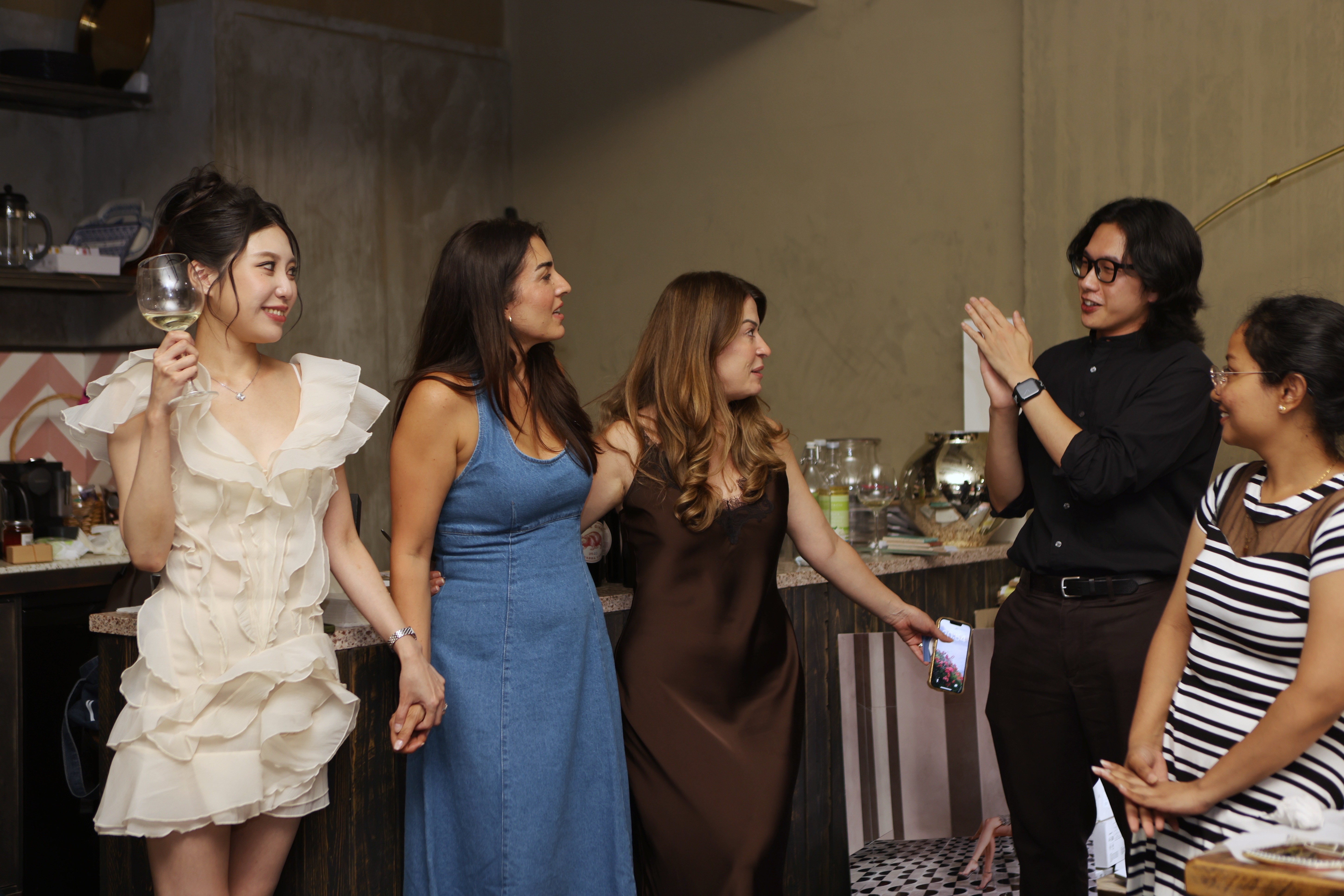
Twenty-two people, a table of handmade tiles, acrylic markers and a finish time of half eight that nobody paid any attention to. Our first studio event, in the Otto Tiles showroom in London Fields.
Alan Cheng

You cannot make an evening happen by drawing it. You can make it more likely.
Seven o'clock
We have been specifying Otto Tiles for long enough that walking into Unit 11 feels like going through our own sample cupboard, only bigger and better lit. When we asked whether we could do something with people in it rather than just pulling boards off a rack, they gave us the showroom and the tiles to work on. We took care of the rest.
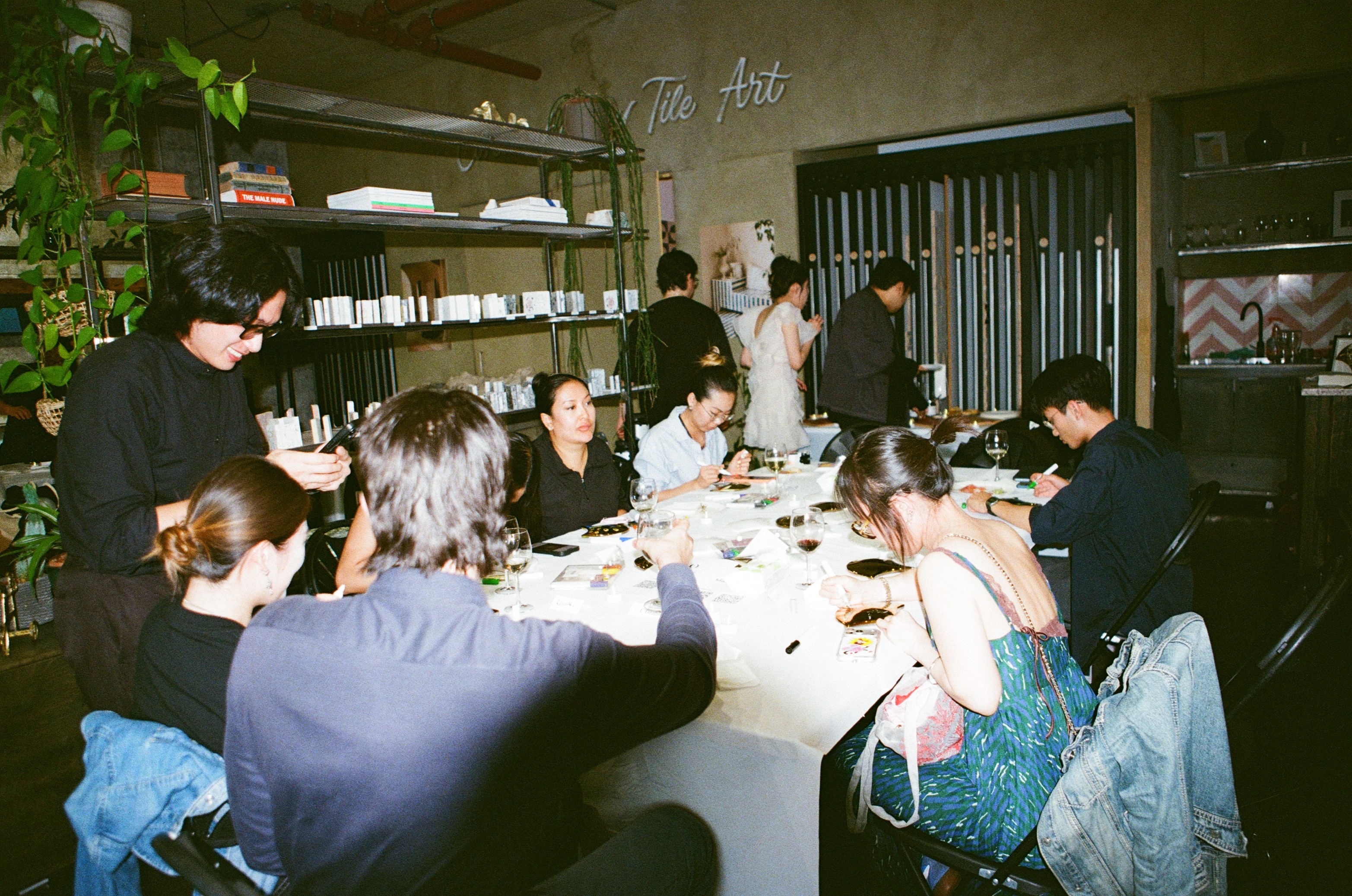
The middle of the showroom had been cleared and papered, the sample racks pushed back to the walls, and the glasses were filled before the first person sat down. Trays of fish scale zellige went along the table. Unglazed on the reverse, each tile slightly off its neighbour in width and in the depth of its curve, because handmade tile moves in the firing and no two arcs in a tray are quite the same arc. You find that out immediately when you try to line six of them up and they refuse.
Twenty-two of us in the end. Interior designers, a couple of architects, property developers, people from studios a few streets away, and clients who came for the wine and stayed for everything after it.

The sample
Before anyone picked up a marker, Sookie put her tile on the table. Klimt's The Kiss, 1908, painted onto the same fan shape everyone in the room was about to be handed, gold laid over the colour so the whole thing reads as metal until you get close to it.

A sample has two jobs and they pull against each other. It has to be worth copying, and it has to look possible. Hers did both, mostly because the shape is doing so much of the work. A fan is not a square. It narrows, it curves, and any composition you put on it has to bend to that or fight it, which is why a figure with a bowed head sits on one so well.
Then twenty-two people spent an evening on the same shape.

The table
Acrylic markers, a tray of colours, no brief beyond what was already sitting there.
What happens when you give a room full of creative people a small square and no constraint is that everyone reveals themselves in about ninety seconds. Half the table went geometric immediately, gridding their tile into quarters and filling them in. The other half went straight to flowers, one stem per tile, following the curve of the scale.
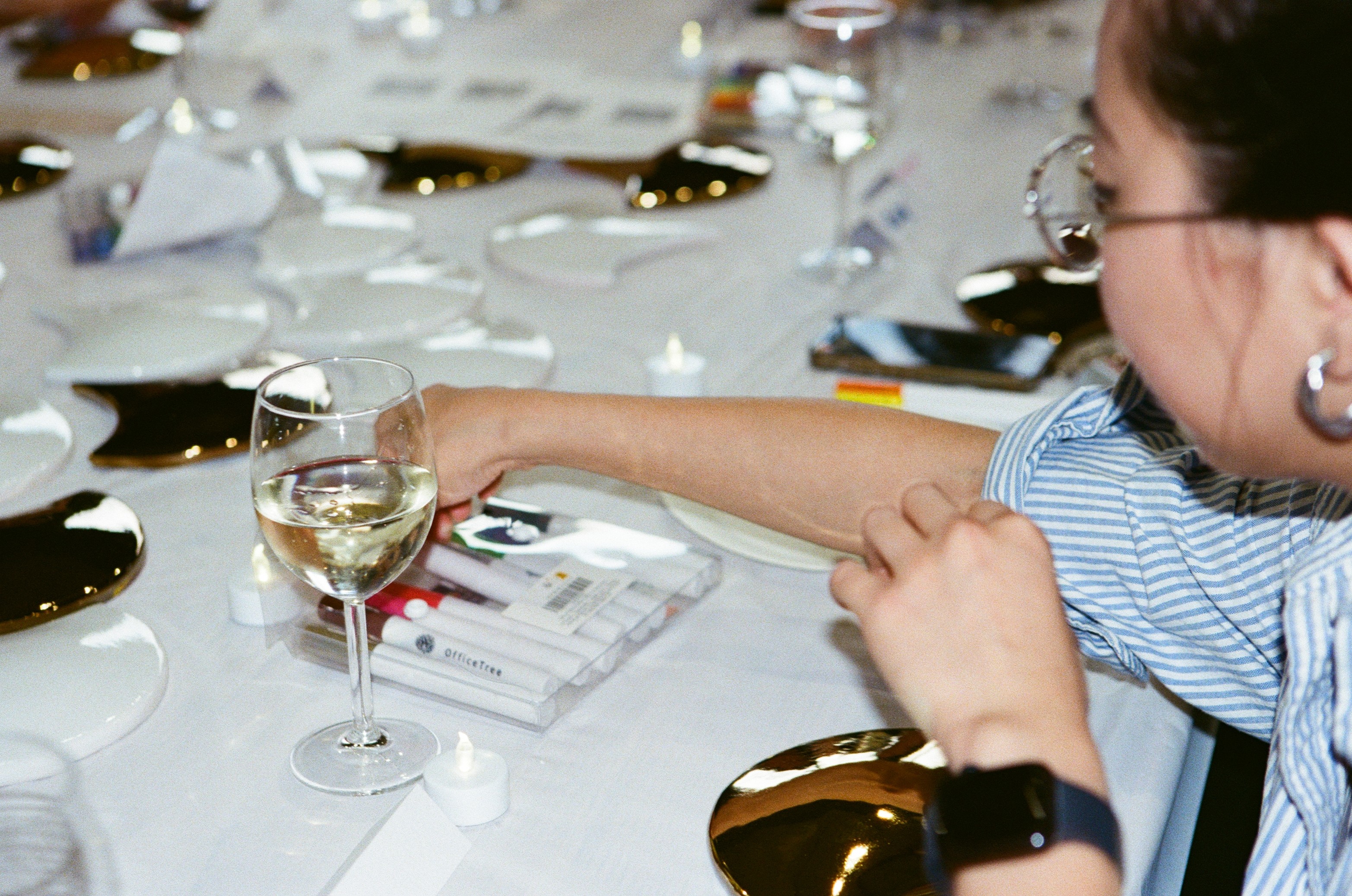
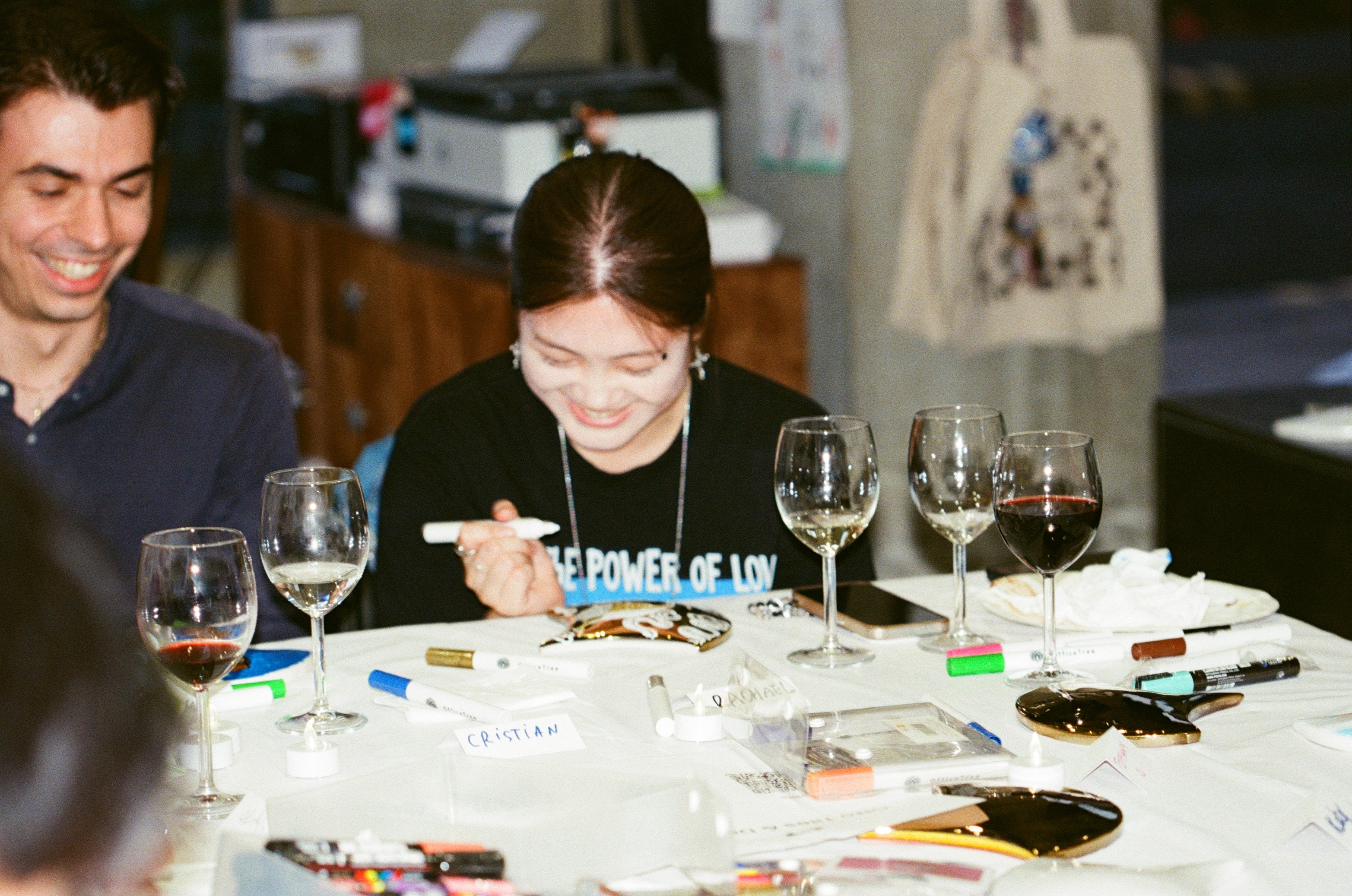
Some of them were genuinely good. There were animals, drawn small and tight into the narrow end where the glaze pools darkest. There were portraits, which is a hard thing to attempt on a curved surface and harder still in marker, and two of them worked. Elsewhere the motifs came from further afield: acanthus and vine borders on one tile, a cloud and wave pattern on another that carried straight over from a Chinese ceramic tradition several centuries older than anything on the table. One person drew nothing for ten minutes, then filled a tile in about four.
I spent most of the evening failing to draw a straight line, which is a fair summary of my drawing generally.

Half eight
By the second glass the tile had become the thing your hands were doing while you talked, which is the best use of a workshop and probably the point of one. Marker work is forgiving in a way that a real material decision never is. Nothing you do to a tile at a table costs anyone twelve weeks.
The painting was meant to finish at half eight and the evening was meant to finish shortly after. It did not. The markers went down, more wine was poured, and the room turned into the kind of loose standing conversation you cannot schedule, people moving between groups with a half-dry tile still in one hand.
Everything we do to a room is aimed at an evening like this one. Circulation, the height of a counter, where the light falls at nine at night, whether people can hear each other across a table. You cannot make an evening happen by drawing it, but you can make it more likely, and once in a while you get to skip the drawing and set the table yourself.
You cannot make an evening happen by drawing it. You can make it more likely.


Later than planned
The table was covered in tiles that would not stack. People wrapping them in newspaper to take home, someone still working on a last one under the good lamp, the light outside London Fields gone entirely and the window turned into a mirror of the room.
This was our first studio event, and everyone who stayed past the end of it is the reason there will be more. Another workshop is being planned for the autumn with a material we have not put on a table before, and we are designing an evening later in the year that is a long way from a showroom and a marker pen. Details when we have them.
Thank you to Dilek and Menekşe at Otto Tiles & Design UK for the showroom, the tiles, and the endless support.